Choosing a martial arts school in Oxnard looks like a small decision and turns into a big one. You are not buying eight weeks of kicking. You are picking the adults who will correct your child in front of other kids, the room your child walks into tired after school, and the standard your family gets measured against for the next two or three years.
We have taught in Ventura County long enough to watch families make this choice well and make it badly. The families who choose well almost never pick on price. They pick on people, on what they see during one honest class, and on how the school answers uncomfortable questions. This guide is the filter we would hand a friend.
Start With the Instructor Who Will Actually Teach Your Child
Every school has a best salesperson and a best teacher, and they are rarely the same person. The tour is usually run by whoever is friendliest on the phone. The person who matters is the one standing on the mat at 5:15 on a Tuesday when your child is distracted and the room is loud.
Ask directly: who teaches this class, every week, and how long have they been doing it? A confident school introduces that person on the spot, even mid-class, even for thirty seconds. A vague answer about a rotating team is not automatically bad, but it tells you consistency is not a priority, and consistency is most of what makes a young student improve.
Watch how the lead instructor handles the least-focused kid in the room. That single moment tells you more than a wall of certificates. You want a correction that is specific, quick, and free of sarcasm. If an instructor gets a laugh at a child's expense, you have your answer.
Watch a Full Class Before You Sign Anything
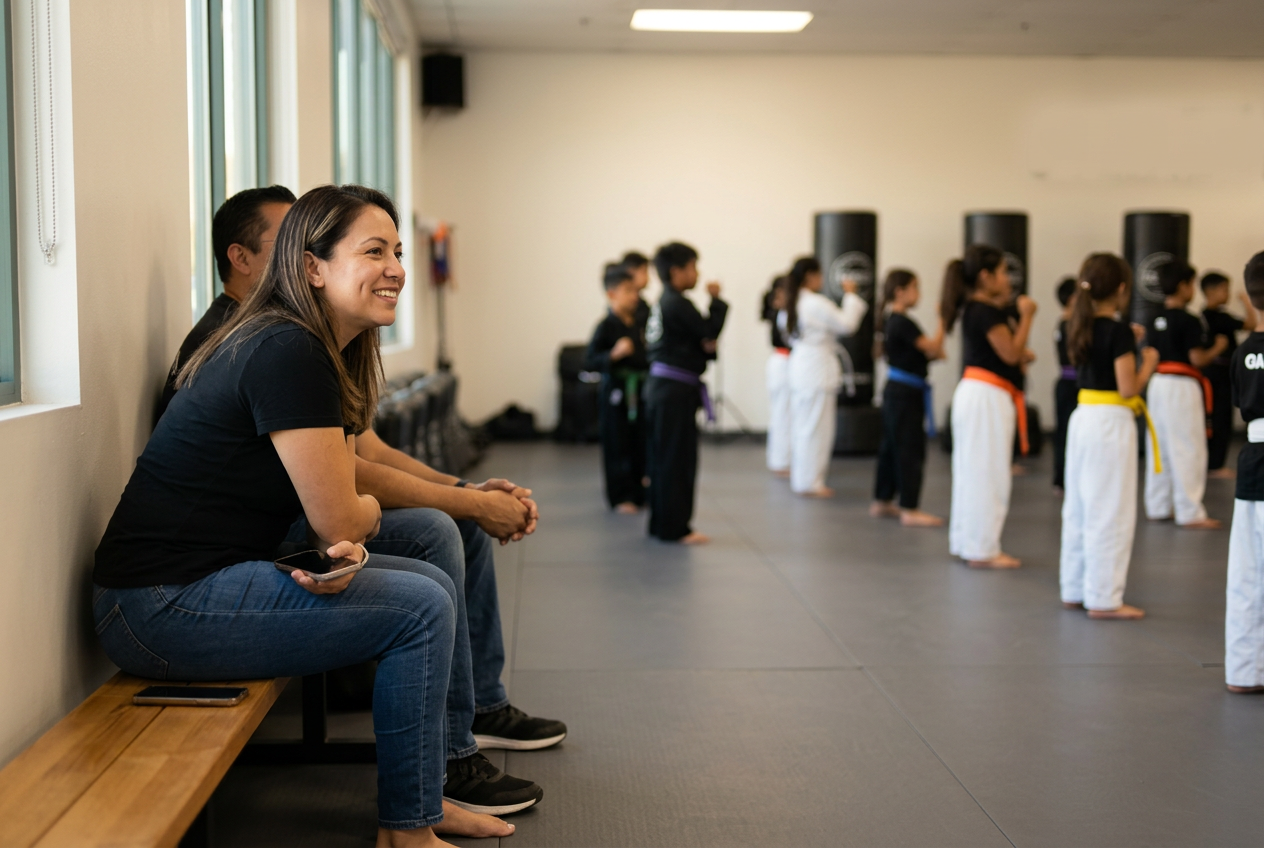
Never judge a school by a highlight reel. Sit through an entire class of the age group your child would join, start to finish, including the messy first five minutes and the tired last five.
Three things to count while you watch. First, how many minutes each child spends standing in line versus moving. Second, how many times an instructor uses a child's name. Third, how many corrections are given per student, because instruction without correction is just supervised exercise.
You should also watch the parents. Are they on their phones or leaning in? Do they know each other? A gym where families talk to each other in the lobby is a gym where kids stay enrolled, because your child's friends are the strongest retention tool in martial arts, stronger than any belt.
Match the Program to Your Child's Actual Age and Stage
A four-year-old and a nine-year-old do not belong in the same room, and a thirteen-year-old does not belong in a class built for second graders. Mixed-age classes are usually a scheduling decision, not a teaching decision, and the youngest and oldest students in the room both pay for it.
Ask how classes are separated and why. A school that can explain its own age ladder in plain language has thought about development. A school that says everyone trains together and it works out fine has not.
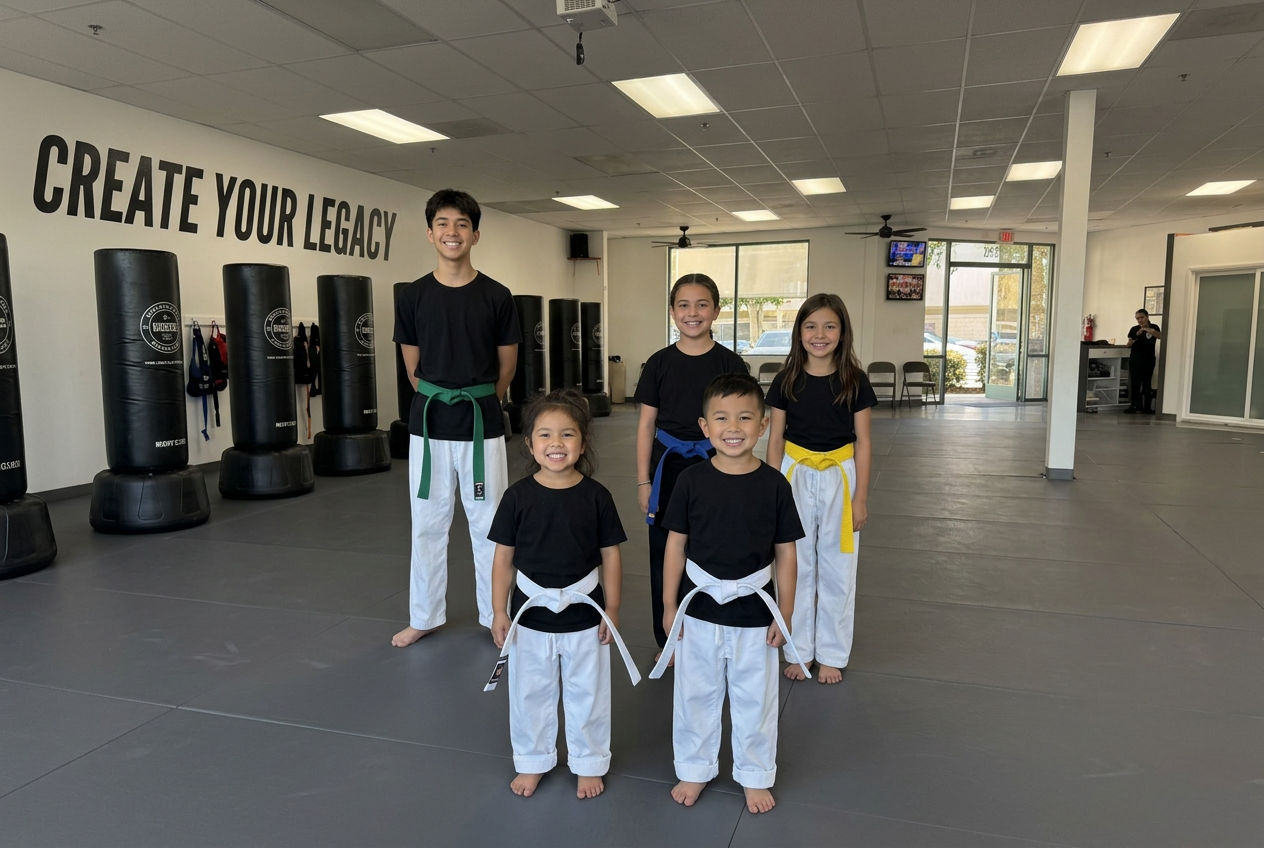
For reference, here is how we split ours:
Read the Agreement Like an Adult, Not Like a Fan
This is where most regret happens. Nobody reads paperwork while their kid is bouncing off the walls asking to sign up. Take the agreement home. If a school will not let you, that alone is your decision.
Look for four specifics. What is the total cost over twelve months, including testing fees, gear, and any required events? What happens if you move, get injured, or lose a job? Is there a month-to-month option at any price? And does the price you were quoted change after the intro period ends?
Honest schools answer all four in under two minutes, in writing. Hedging, a rush to sign today, or a discount that vanishes if you leave the building are pressure tactics. Pressure at the front door usually means pressure later.
Ask What Happens After the Trial Ends
Trial offers are marketing, and that is fine. Ours exists for the same reason everyone's does: you cannot judge a school from a website. The real question is what week five looks like, because that is when novelty wears off and the actual program shows itself.
Ask how progress is tracked between belts, how often students are formally evaluated, and what an instructor does when a child stalls. You want a specific answer with a timeline in it. Vague talk about confidence and respect is a value, not a plan.
Also ask what the school does when a student stops showing up. The good ones call. The ones that never notice were selling a membership, not teaching a kid.
Look at the Room, Not the Marketing Photos
Walk the floor. Mats should be clean and flat, with no curling seams a bare foot can catch. Restrooms tell you how the business is actually run. Gear should be organized instead of piled. Sight lines from the lobby should let you watch class without hovering on the mat.
Ask about supervision details most parents forget: how students are dismissed, who is allowed to walk a child out, and how many adults are on the floor during the biggest class of the week. A school that answers these crisply has run them before.
Red Flags Worth Walking Away From
- A price that is only available today, or a discount tied to signing before you leave.
- No written breakdown of twelve-month cost, including testing and gear.
- Guaranteed black belt in a fixed number of years, regardless of the student.
- Instructors who cannot tell you who is teaching next week.
- Belt promotions with no visible standard, where everyone advances on the same day.
- A school that talks about your child's problems more than your child's progress.
Green Flags Most Parents Miss
- Instructors use student names constantly and correct with specifics.
- Older students help younger ones without being told to.
- Parents linger after class instead of sprinting to the car.
- The school tells you honestly when a program is not the right fit for your child.
- You can watch any class, any day, without an appointment.
The Only Long-Term Metric That Matters
Every benefit parents want, focus, confidence, discipline, respect, self-defense, comes from one thing: your child showing up consistently for a long time. Nothing else in this guide matters if your kid dreads Wednesday.
So after the trial, ask your child one question and listen to the tone more than the words: do you want to go back? A yes with energy behind it is worth more than a longer curriculum, a bigger building, or a lower price.
Frequently Asked Questions
How much should martial arts cost in Oxnard?
Most quality programs in Ventura County run in a similar monthly range, and the differences between schools show up in class size, instructor experience, and how much extra you are asked to pay for testing and gear. Compare total twelve-month cost, not the headline monthly number.
How many classes a week does a child need?
Preschoolers do well with two short classes per week. Kids seven and up progress noticeably faster at two, and teens and adults need at least three to build real conditioning and retention.
What style is best for kids?
Style matters far less than teaching quality at this age. A well-run traditional program, a good kickboxing class, and a strong grappling class all build the same underlying focus and confidence. Pick the teacher, not the label.
Should I let my child quit if they want to?
Not on the first bad day. Ask a good school for help before you decide, because most quitting moments are a specific fixable problem: a hard class, a friend who left, or a skill that feels out of reach. Finish the month you paid for, then decide with clear information.
How do I know if a school is safe?
Watch a class and count the adults, check how contact drills are supervised, and ask how injuries and dismissals are handled. Safe schools have specific, boring, well-rehearsed answers.
Come Use This Checklist on Us
Bring every question in this guide to our floor in Oxnard. Watch a full class, meet the instructor who would actually teach your child, and read the agreement at your kitchen table before you decide anything. If another school answers better, go there, and we will mean it.
New Student Experience
Ready to See It In Person?
2 Weeks of Classes — $158 $25
Keep Reading
Mighty Badgers
Preschool Martial Arts in Oxnard: What Ages 3 to 6 Actually Learn
Youth Martial Arts
Kids Martial Arts in Oxnard (Ages 7 to 12): A Parent's Complete Guide
Teen & Adult
Adult Martial Arts in Oxnard: Self-Defense and Real Fitness After 30
Parent Guide