If you're an Oxnard parent standing outside a martial arts school wondering whether it's worth the drive, the schedule shuffle, and the monthly cost, you're not alone. Most families come to us with the same quiet worry: is this going to be a fad, or is it actually going to change something for my kid? After more than a decade teaching kids ages 7 to 12 in Oxnard, Port Hueneme, Camarillo, and Ventura, we can tell you honestly: it usually changes more than parents expect, and rarely in the way they expected.
This guide walks through what kids actually get out of martial arts at this age, what a real class looks like, how progress unfolds over the first year, and how to handle the moment (and it usually comes) when your child says they want to quit.
What Ages 7 to 12 Actually Get Out of Martial Arts
Ages 7 to 12 sit right in the window where kids are old enough to follow multi-step instructions and young enough that habits still form easily. This is the age where a martial arts program does its best work, not because of anything magical about karate itself, but because structured, repeated practice with clear feedback builds real skills fast at this stage of development.
- Confidence that comes from earned skill, not empty praise
- A calmer, more grounded posture that discourages bullies without a single confrontation
- Focus habits that carry over into homework and classroom attention
- Real self-defense skills appropriate for their age and size
- A visible belt system that rewards effort and consistency
- A healthy, active alternative to screen time after school
That anti-bullying piece deserves its own mention. We don't teach kids to be aggressive. We teach them to stand tall, make eye contact, and speak with a calm, firm voice. Bullies tend to look for an easy reaction, and a kid who carries themselves with quiet confidence simply isn't an easy target anymore.
The focus benefits show up faster than most parents expect. Martial arts class demands that a child listen to an instruction, execute it, and adjust based on feedback within seconds. Practiced two or three times a week, that skill starts to transfer to sitting still in class, following multi-step directions from a teacher, and finishing homework without ten reminders.
How a Legacy Youth Martial Arts Class Actually Runs
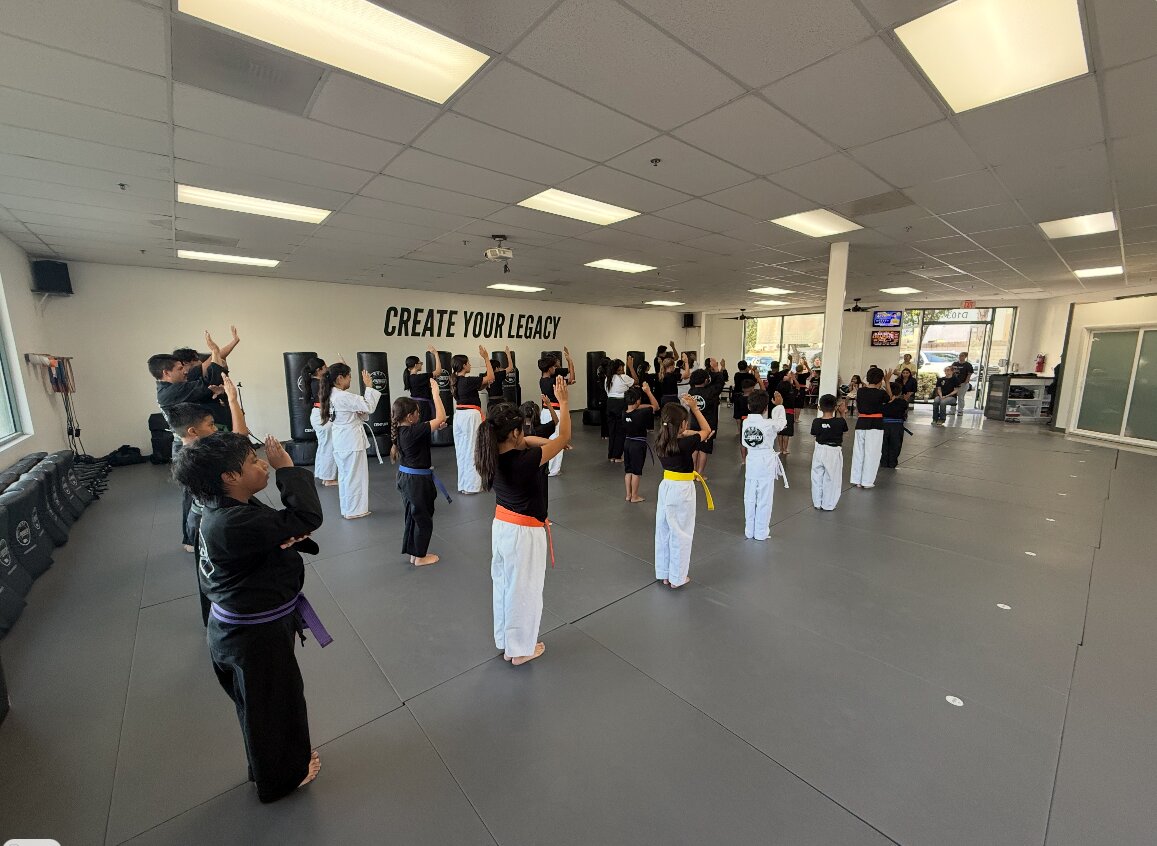
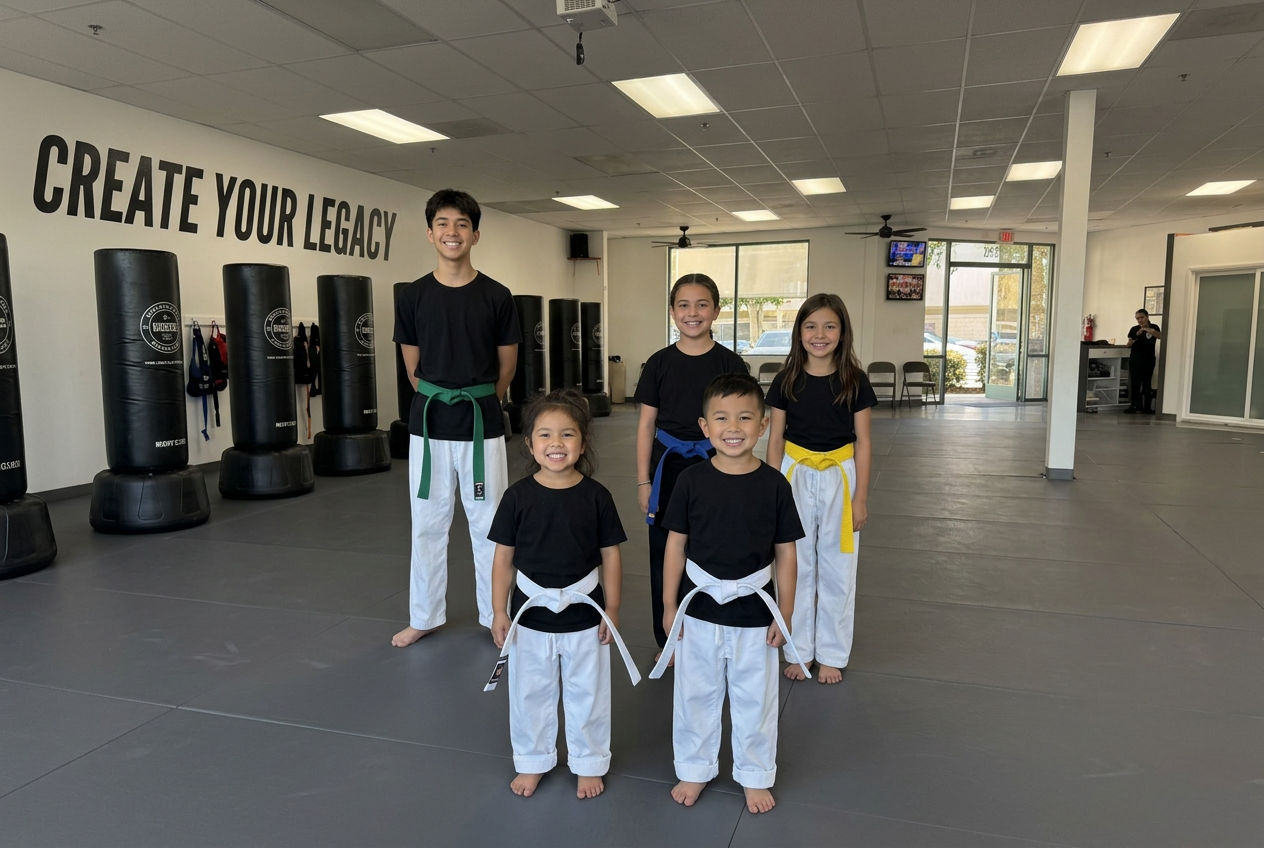
Parents in Oxnard and Camarillo often ask what actually happens for the 45 minutes to an hour their child is on the mat. Here's the honest rundown of a typical Youth Martial Arts class at Legacy.
- Warm-up: light cardio, stretching, and coordination drills to get bodies and minds ready
- Technique: focused instruction on strikes, blocks, kicks, and stances for the day's lesson
- Forms: a set sequence of movements practiced for precision, memory, and discipline
- Partner drills: controlled, supervised practice of technique with a classmate
- Mat chat: a short values conversation on topics like respect, perseverance, or handling conflict
- Belt testing: periodic evaluation of skill and readiness for the next rank
Every class is instructor led and closely supervised. We keep ratios tight enough that no child is coasting unnoticed in the back row, and no child is left behind because the pace moved too fast. Kids who need more challenge get it, and kids who need more repetition get that too.
The mat chat portion is one parents don't expect but often mention later. It's a few minutes where the instructor talks through a real value, like how to apologize sincerely or what to do if a friend is being excluded. It's not a lecture. It's a conversation, and kids remember it because it's tied to something they just physically practiced.
Explore our age-based programs to see which class fits your child:
How Many Classes a Week, and What Progress Actually Looks Like
Most families in our Youth Martial Arts program train two to three times per week. Two classes a week is enough to build consistent habits and see real progress. Three classes a week accelerates skill development and tends to produce faster belt advancement, but it's not required to see meaningful results.
Here's what we typically see, broken down honestly by timeframe. These are general patterns, not guarantees, since every child develops at their own pace.
At 3 Months
Your child knows the basic stances, a handful of strikes and blocks, and the etiquette of the dojo (bowing in, addressing instructors respectfully, lining up by rank). They've likely earned one or two belt stripes or their first colored belt. Most kids are noticeably more comfortable in the space and starting to make friends in class.
At 6 Months
Technique starts to look sharper and more automatic. Kids can perform a full form from memory, and many parents report improved focus at home and school around this point. This is also when the first real belt test with sparring or board breaking usually happens, which is a genuine confidence milestone.
At 12 Months
A full year in, most kids have advanced through several belt ranks and show a real command of the curriculum: multiple forms, self-defense sequences, and controlled sparring. More importantly, the traits that started on the mat, like discipline, respect, and the ability to push through something hard, tend to show up consistently in the rest of their life.
Martial Arts vs. Team Sports: A Fit for Kids Who Don't Love the Sideline
Not every kid thrives on a soccer field or a basketball court, and that's completely normal. Team sports are great for a lot of kids, but they come with a built-in structure that doesn't work for everyone: you're one of eleven players, playing time isn't guaranteed, and progress is measured by whether the team wins.
Martial arts flips that structure. Progress is individual. A child's belt rank reflects their own effort and skill, not whether their teammates showed up that day. There's no bench. Every student trains every class. For kids who've felt overlooked or discouraged in a team sport setting, that individual structure can be the difference between dreading practice and looking forward to it.
- No benching: every student participates fully, every class
- Progress is personal and visible through belt rank, not tied to a scoreboard
- Smaller, more direct instructor attention than most team sport practices allow
- A built-in growth path from white belt through black belt that keeps motivation fresh for years
This doesn't mean martial arts and team sports are mutually exclusive. Plenty of our Oxnard, Port Hueneme, and Ventura families do both, and many coaches tell us martial arts kids bring noticeably better body control and focus to their other sports.
When Your Kid Says They Want to Quit
It happens to almost every family at some point, usually a few months in, right around a plateau or a testing cycle that felt hard. Before you let your child quit, it's worth digging into why.
- Ask specifically what's bothering them: a particular drill, a classmate, or just fatigue after school
- Check if it's happening near a belt test; testing anxiety is common and usually temporary
- Talk to the instructor directly; we notice patterns you might not see from the lobby
- Consider a short break rather than a full stop if your child is genuinely burned out
- Remind them (and yourself) that most worthwhile skills feel hard right before they click
In our experience, kids who push through that early wall almost always end up glad they did, and the belt they earn afterward means more because of the struggle. That said, we're not interested in forcing a miserable child to stay in a program they truly hate. Our instructors will always give you an honest read on whether your child is having a rough week or is genuinely not a fit.
Cost and Commitment: The Honest Version
We'd rather be straightforward with Oxnard families than oversell anything. Martial arts is a real commitment of time and money, and it's fair to weigh it against other activities. Our intro offer is $25 for two weeks of classes plus a uniform, which gives your family a genuine, low-pressure way to see if the program fits before committing to a longer membership.
Beyond the intro period, memberships are month to month with tiers based on how many classes per week your child attends. There's no hidden testing fee surprise sprung on you; we walk through belt testing costs upfront so you know exactly what to expect as your child advances. If a schedule or budget change comes up, talk to us directly. We'd rather adjust than lose a family over a conversation we never had.
Ready to see the program in person or plan a celebration on the mat?
Frequently Asked Questions
What is the best age to start martial arts?
Ages 7 to 12 are often considered the sweet spot for building lasting skill and discipline, since kids at this age can follow detailed instruction and retain sequences well. That said, we also offer Mighty Badgers for ages 3 to 6, so younger siblings can start building focus and listening skills earlier.
How long does it take to earn a black belt?
For most kids training consistently two to three times a week, earning a black belt typically takes several years. The timeline depends on attendance, effort, and how thoroughly each rank's material is mastered before advancing, since we don't rush students through belts just to hit a calendar date.
Is martial arts good for shy or anxious kids?
Yes, often especially so. The structured, predictable format of a martial arts class gives shy kids a clear framework to succeed in, without the social unpredictability of a playground or team sport. Many parents tell us it's the first activity where their reserved child speaks up and leads.
Will martial arts make my child more aggressive?
It's a common worry, but the opposite tends to happen. Real martial arts instruction emphasizes control, respect, and restraint. Kids learn that techniques exist for self-defense and discipline, not for starting conflicts, and most parents report calmer behavior at home, not more aggression.
How is this different from a self-defense class?
A standalone self-defense class usually covers a handful of techniques over a few sessions. Our Youth Martial Arts program builds those same self-defense skills gradually within a larger structure that also develops fitness, focus, discipline, and long-term goal setting through the belt ranking system.
Do you serve families outside of Oxnard?
Yes. We regularly welcome families from Port Hueneme, Camarillo, and Ventura, and many of them tell us the drive is well worth it once they see how their child responds to the program.
See It for Yourself
Reading about a martial arts class only gets you so far. The real answer to whether this is right for your child comes from watching them on the mat. Come visit our Oxnard location at 2711 S. Rose Ave, Suite D103, watch a live Youth Martial Arts class, and talk with our instructors about your child specifically.
Call us at 805-240-7424 or visit our contact page to schedule a visit and claim the intro offer. Two weeks of classes and a uniform for $25 is a low-risk way to find out if this is the activity that finally clicks for your kid.
New Student Experience
Ready to See It In Person?
2 Weeks of Classes — $158 $25
Keep Reading
Mighty Badgers
Preschool Martial Arts in Oxnard: What Ages 3 to 6 Actually Learn
Teen & Adult
Adult Martial Arts in Oxnard: Self-Defense and Real Fitness After 30
Parent Guide
How to Choose a Martial Arts School in Oxnard: A Parent's Field Guide
Parent Guide